

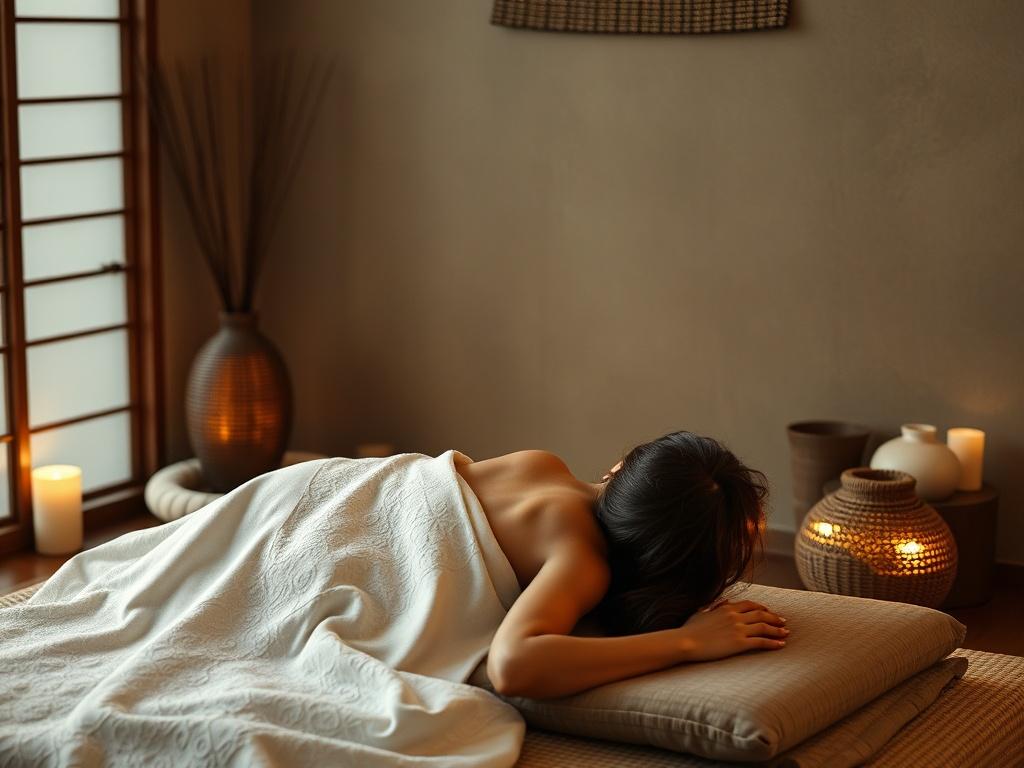
When you hear the words “Japanese sensual massage,” images and assumptions may rush in. This article peels those layers back to reveal a practice rooted more in attentive touch, relaxation, and ritual than in anything sensational. It draws on long-standing Japanese approaches to bodywork—like anma and shiatsu—while emphasizing atmosphere, consent, and techniques designed to awaken the senses without crossing personal boundaries. Read on for practical steps, safe techniques, cultural background, and how to create a calm, respectful experience whether you’re a curious beginner or someone wanting to deepen a caring touch.
Origins and cultural context
Japanese bodywork traditions date back centuries, borrowing from Chinese medicine and evolving within their own cultural framework. Anma, an older style of massage, focuses on kneading and pressure and was historically a common therapeutic practice. In the 20th century, shiatsu—literally “finger pressure”—was formalized and popularized. Unlike Western spa traditions that often prioritize long strokes with oil, many Japanese methods emphasize precise pressure, rhythm, and working along energy channels or meridians. That legacy informs modern approaches to sensual massage here: the goal is a quiet attentiveness, not spectacle.
What “sensual” means in this context
Sensual in this article means awakening the senses—touch, scent, sound—while maintaining respect for the person receiving the massage. It is about heightening awareness of the body’s responses: warmth spreading through muscles, the gentle settling of breath, the pleasant weight of another’s hand. Sensual does not have to mean sexual. It can be restorative, even spiritual. When touch is applied with presence and consent, it becomes a bridge to relaxation and emotional release.
Core techniques and how they differ
Several foundational techniques borrowed from Japanese practice work well for a sensual, non-explicit massage. They are simple to learn, safe when done mindfully, and easy to adapt. Below is a concise table to compare the main strokes and their effects.
| Technique | How it’s done | Sensory effect |
|---|---|---|
| Kneading (Anma style) | Use palms and fingers in circular or rolling motions over larger muscles | Soothes tightness, increases warmth, comforts the nervous system |
| Thumb/finger pressure (Shiatsu) | Sustained, gentle pressure on specific points or meridians | Creates deep release, focuses sensation, encourages breath regulation |
| Feathering / Light stroking | Long, soft strokes with fingertips or the flat of the hand | Activates skin receptors, heightens relaxation and sensual awareness |
| Palming and warming | Rubbing hands together, then resting warm palms on the body | Provides grounding, signals safety, supports emotional ease |
Setting the scene: space, scent, and sound
The environment shapes how touch is perceived. A clean, uncluttered room calms the eye. Soft, indirect lighting prevents sharp contrasts that make muscles tense. Neutral scents—hinoki (Japanese cypress) wood, green tea, or a light citrus—can enhance relaxation but use them sparingly; strong perfumes distract. Sound matters: low, steady music or quiet ambient noise helps the mind soften. Temperature should be warm enough for skin exposure without discomfort. These small details create a container where touch can be meaningful.
Supplies and simple checklist
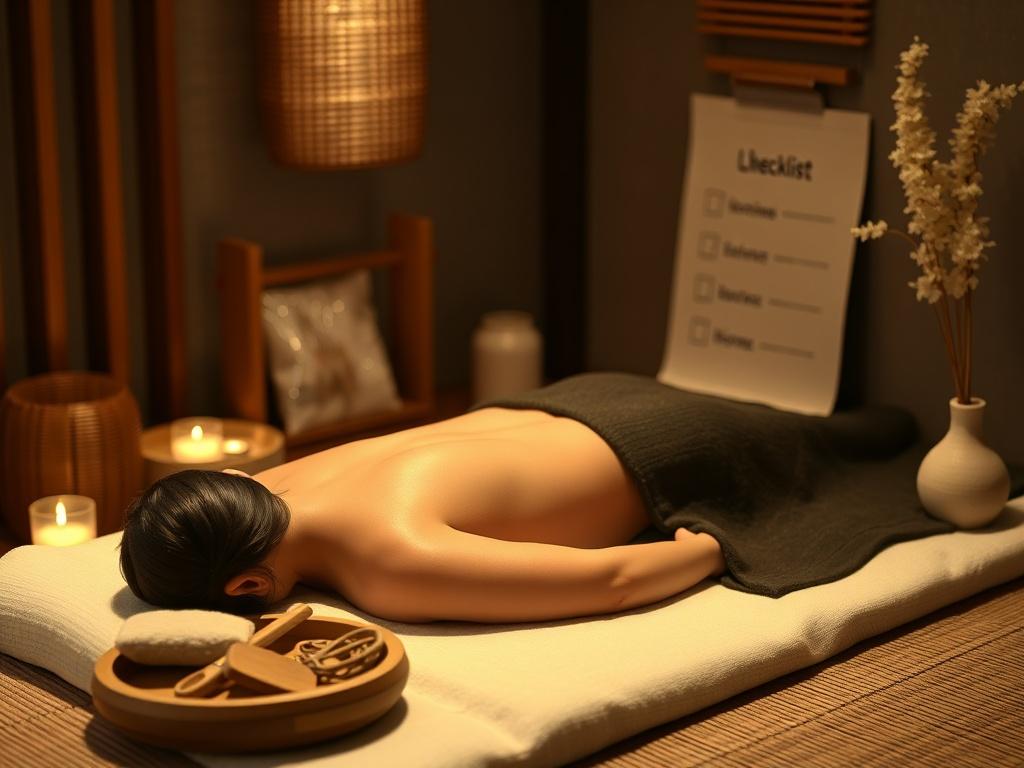
There’s no need for exotic tools. A few considered items let the experience feel intentional and respectful. Keep everything within reach so you can stay present with the person you’re massaging.
- Firm surface: futon, massage table, or well-padded mat
- Soft blankets and pillows for support and modesty
- High-quality, neutral oil (jojoba or light almond oil) or massage lotion
- Towels to protect linens and to cover areas not being worked on
- Optional: small diffuser with subtle scent, speaker for music
Step-by-step beginner routine
0
This short routine is designed to be gentle and respectful, lasting about 30–45 minutes when done slowly. Adapt the pace according to the receiver’s feedback and always prioritize consent and comfort.
- Welcome and check-in: Ask about comfort, pressure preferences, and areas to avoid. Establish a safe word if helpful.
- Warm hands: Rub palms together to generate warmth, then rest them on the person’s shoulders or lower back to signal presence.
- Start with light stroking: Move from the shoulders down the back with long, feathering strokes to calm the nervous system.
- Introduce kneading: Apply gentle circular motions across the shoulders and upper back. Keep movements slow and consistent.
- Use thumb/finger pressure: On tense spots, press gradually and hold for 3–6 seconds, then release slowly. Encourage the receiver to breathe into the pressure.
- Return to long strokes: Finish each area with another pass of soft stroking to integrate the work.
- Finish gently: Place warm palms on the person’s back or shoulders for a minute to close the session, then allow them a few moments to rest before sitting up.
Health benefits and safety considerations
Tactile therapies can reduce muscle tension, lower heart rate, and ease anxiety when applied responsibly. Studies show that non-sexual, caring touch triggers oxytocin release, which supports bonding and stress reduction. However, not all touch is appropriate for everyone. Avoid deep pressure over varicose veins, recent injuries, or areas with inflammation. If the person has chronic conditions—like cardiovascular disease, diabetes, or neuropathy—suggest they consult a healthcare provider before receiving massage. When in doubt, keep pressure light and stick to superficial techniques.
Communication, consent, and boundaries
Clear communication is non-negotiable. Consent should be explicit and ongoing. Begin with a short conversation about comfort levels, then ask for feedback during the session: “Is this pressure okay?” and “Would you like more or less?” Respect silence as an answer, but also allow for verbal check-ins without disrupting relaxation. If boundaries are set—certain areas off-limits, a firm no to specific touches—honor them without question. This is the foundation of any sensual practice that aims to be respectful and restorative.
Common mistakes to avoid
A few pitfalls crop up often with well-meaning beginners. Rushing through transitions breaks the rhythm and undermines trust. Using too much oil can make hands slip and feel detached; use only what you need. Overemphasizing a single sore spot without integrating surrounding tissue can produce more discomfort than relief. Lastly, assuming sensual equals sexual can lead to boundary violations—always prioritize the receiver’s safety and autonomy.
When to seek professional help
There’s a time for intimate, at-home touch and a time for trained hands. If someone has persistent pain, mobility limitations, or trauma history, refer to licensed therapists who specialize in therapeutic bodywork and trauma-informed care. Professionals can offer deeper, safer interventions and have the training to navigate complex medical and psychological factors.
Practical tips for ongoing practice
Like any skill, sensitive, attentive touch improves with practice. Short, frequent sessions—10 to 20 minutes a few times a week—build confidence faster than occasional long ones. Keep the conversation open about preferences; people’s needs shift. Experiment with tempo and pressure, but return frequently to the basics: warmth, patience, and steady breathing. These qualities are what transform a sequence of strokes into a meaningful exchange.
Conclusion
Japanese sensual massage, approached with intention, becomes an elegant combination of simple techniques, environment, and ethical practice. It’s less about exoticism and more about presence: warm hands, steady breath, and honest communication. By learning basic kneading, careful pressure work, and how to set a calm scene, you can offer a restorative touch that honors the receiver’s boundaries and encourages genuine relaxation. Respect, consent, and attentiveness are the true traditions you bring into any massage; everything else—the oils, the music, the specific strokes—serves that core purpose.